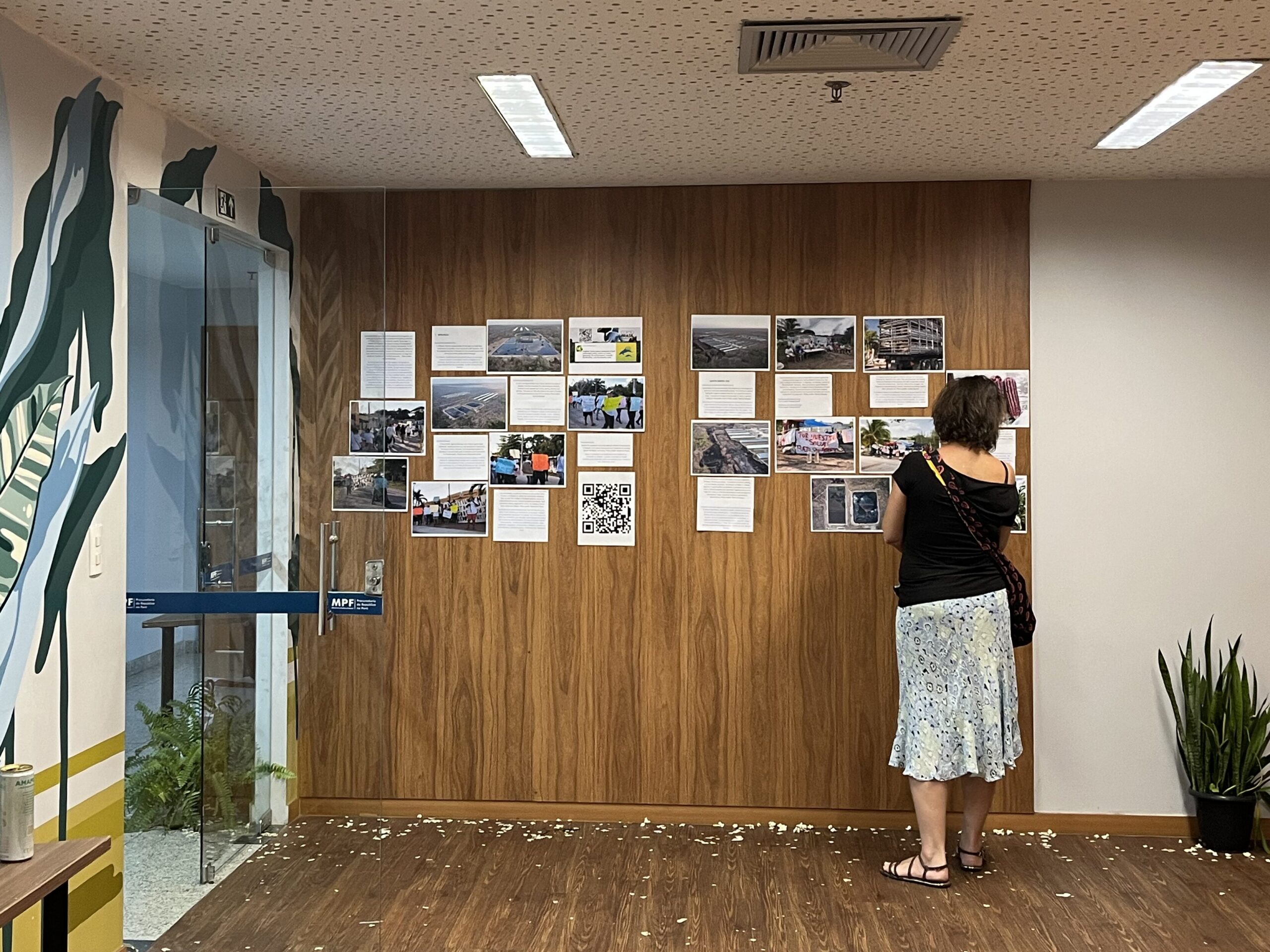
Defenders of the Yucatán is the title of a new online photo exhibition by reporter Patricio Eleisegui and filmmaker Maricarmen Sordo documenting the impacts of industrial animal mega-farms on three Mayan communities in Mexico’s Yucatán Peninsula. The exhibition follows their short film on the subject, Slaughter-land, which won first place in the 2025 Yale University Environment 360 film contest. This project emerged from investigative journalism by Eleisegui, supported by Brighter Green’s Animals and Biodiversity Reporting Fund.
The exhibition was first presented in person in Portuguese and English during the People’s Tribunal against Ecogenocide held during the COP30 climate summit in Belém, Brazil in November 2025. Following the COP30 conference, Project Assistant Isabel Keener and Associate Isis Alvarez developed a digital version of the photo exhibition to make it widely accessible. The online exhibition—with text in English, Spanish, and Portuguese—features images and contextual materials documenting environmental defenders from the communities of Sitilpech, Kinchil, and Santa María Chí, who face severe threats to their wellbeing, ecosystems, and livelihoods linked to large-scale animal production.
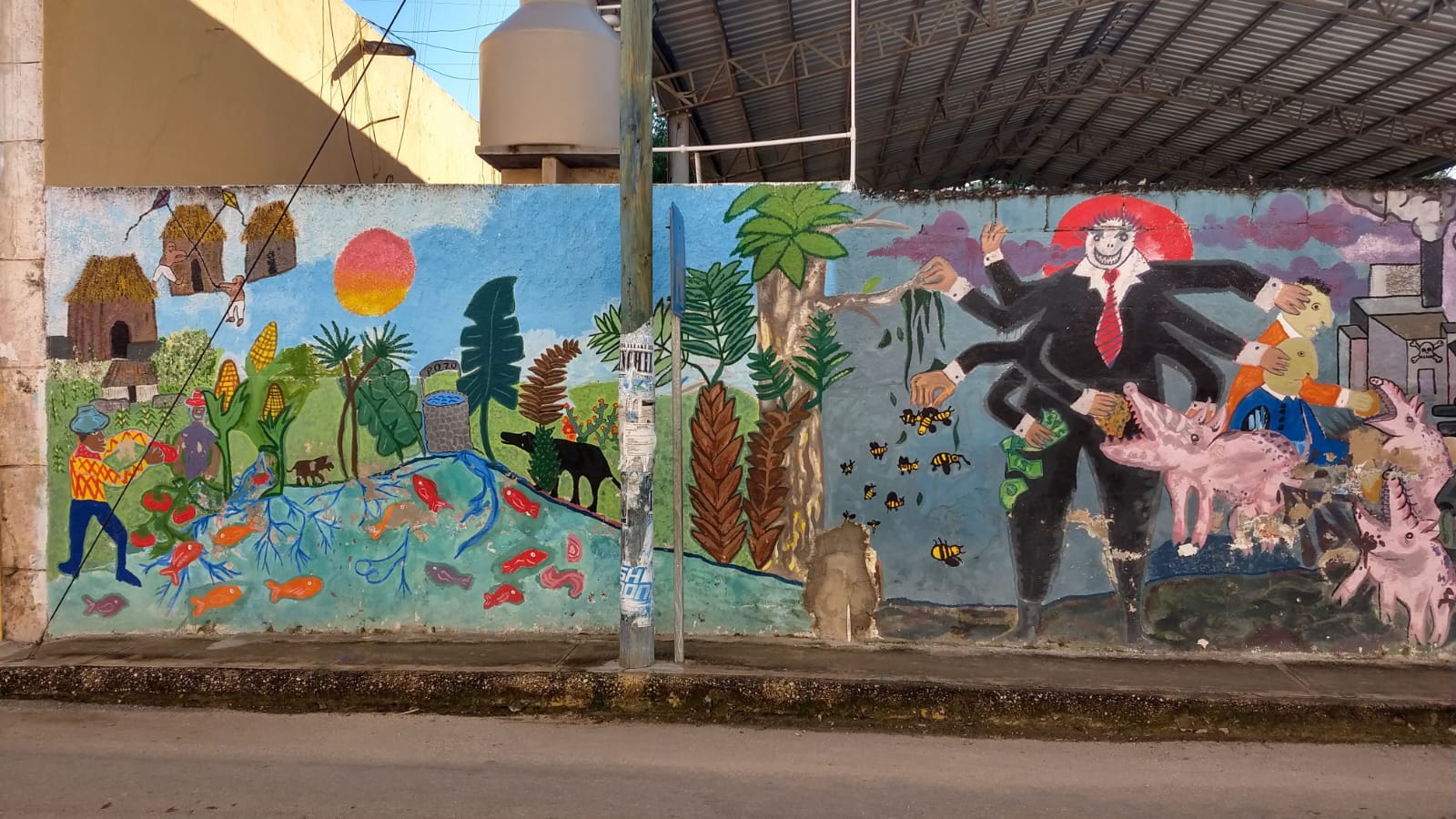
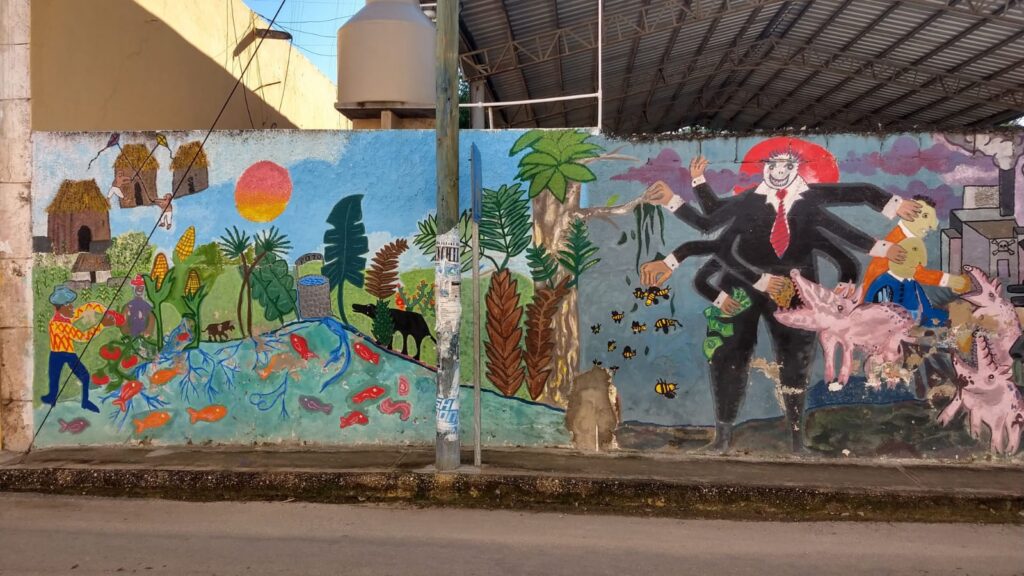
Some of the photographs of Kinchil feature an expansive, multi-colored mural created in protest against the mega-farms. The composition portrays the “before,” “during,” and hopeful “after” of the introduction of the farms. Alongside such intimate glimpses of the affected communities are photographs that chart the sheer magnitude of the megafarms via aerial perspectives. In Sitilpech, this includes black oceans of pig waste that capture the reality of a farm that holds 48,000 pigs at one time, while the local population is less than 2,000 people (images below).

Of the approximately 800 megafarms in the Yucatán, about 70 percent are located within the protected Ring of Cenotes, a Ramsar wetlands convention site in the northwest of the peninsula. Given the threats posed by mega-farms to the Ring of Cenotes, a local NGO, Guardians of the Cenotes (or Kana’an Ts’onot), has initiated a legal case seeking personhood and attendant rights for the Ring.
During COP30, Brighter Green also participated in the UN climate change summit (COP30), the People’s Climate Summit, and a series of gatherings organized by the Global Alliance for the Rights of Nature (GARN). Brighter Green recently became a GARN member in a joint effort to end the expansion of the mega-farms in the Yucatán, stop the cruel exploitation of farmed animals, and advance nature’s and human rights. While in Belém, Associate Isis Alvarez participated in strategy sessions marking the alliance’s 15th anniversary and an assessment of progress, setbacks, and lessons learned in advancing the Rights of Nature framework. Brighter Green submitted the case of industrial animal mega-farms in the Yucatán to GARN’s Rights of Nature Tribunal.
GARN was engaged in a tribunal process examining the consequences of the recently-completed Maya Train (Tren Maya), a $30 billion looping through 34 stations around the Yucatán peninsula. Designed to facilitate tourism, the train’s construction has caused widespread deforestation and bisected wildlife habitats. During a site visit, GARN’s delegation had also gathered information on the megafarms and agreed to partner with Brighter Green to include the megafarms in their tribunal ruling. Drawing on evidence documented by investigative journalists, scientists, and affected communities, the Tribunal’s ruling, addressed to the government of Mexico, detailed violations of the rights of water, forests, wildlife, and Indigenous peoples, as well as the systemic cruelty inflicted on pigs raised in these facilities.
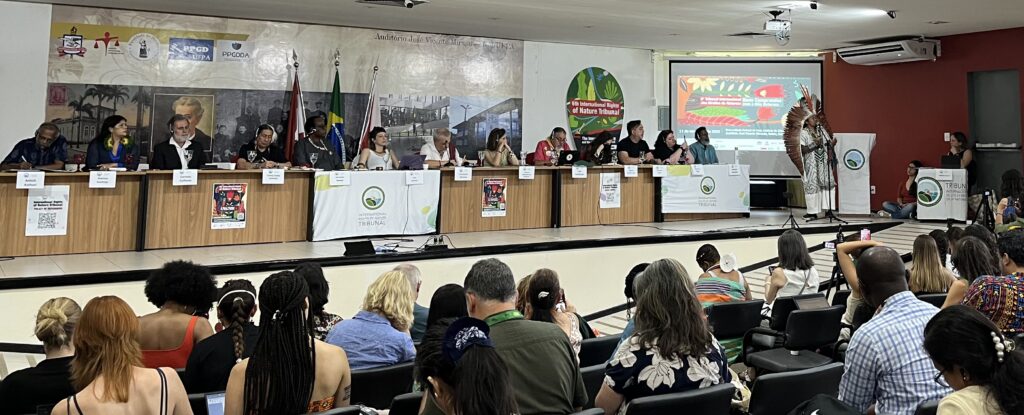
The Tribunal’s deliberations at COP30 contributed to a “New Pledge for Mother Nature,” calling for protections for environmental defenders and a moratorium on fossil fuel extraction, while reinforcing the need to confront industrial animal agriculture as a major driver of ecological harm and rights violations.
Defenders of the Yucatán offers a visual entry point into the lived experiences behind the reporting and research. The photo exhibition reinforces Brighter Green’s commitment to pairing rigorous investigative reporting with engaging narrative structures and community-centered storytelling. Please click here to view the exhibition, and feel free to share with colleagues and stakeholders.
Patricio Eleisegui is an independent journalist, writer, and photographer known for his in-depth investigations of the agro-industry and its social and environmental consequences. He has authored influential works such as Envenenados and Fruto de la Desgracia, which expose the human toll of pesticide-intensive agriculture and labor abuses.
Maricarmen Sordo is a cinematographer based in Mexico. She directed Una laguna negra (2021) and was the director of photography for the documentary ¿Qué les pasó a las abejas? (2018). She is currently working on two documentaries focused on socio-environmental issues and is involved in pre-production and scriptwriting for a feature film.